6 Aug 2026
Navigating Legislative Changes and Their Effects on Feature Integration in Portable Gaming Interfaces Across Multiple Jurisdictions

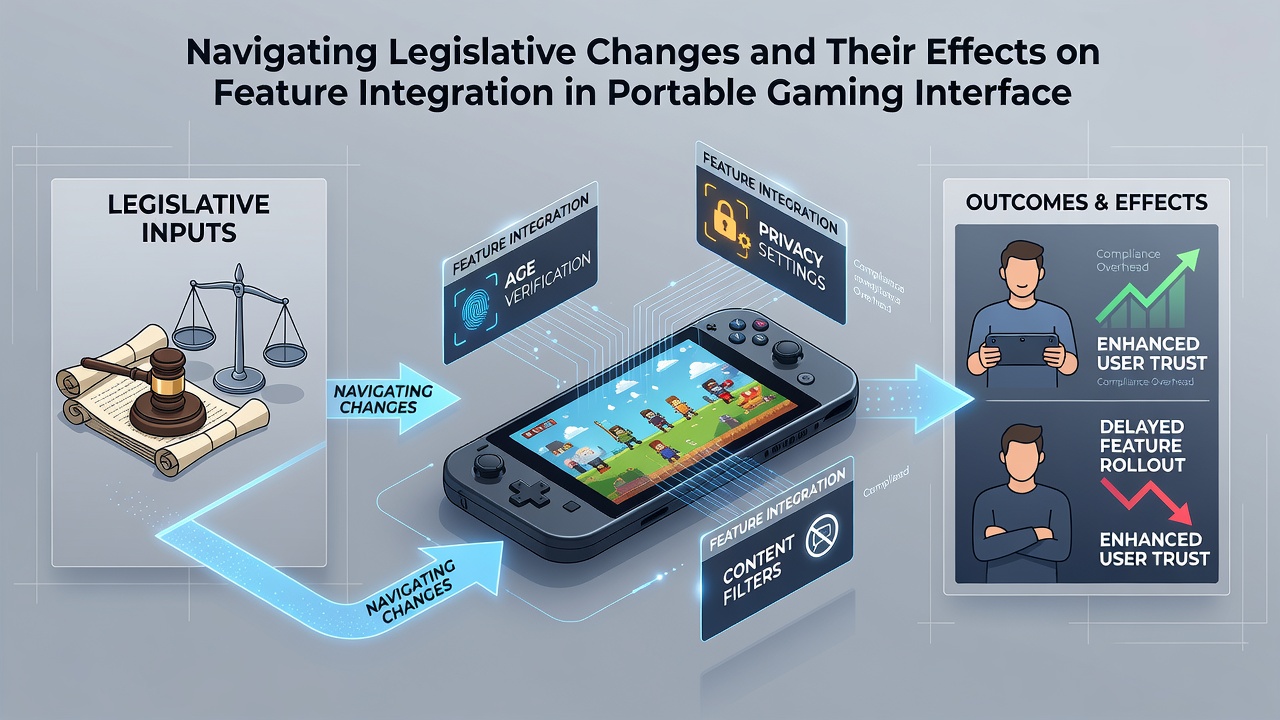
Legislative shifts in multiple regions continue to reshape how developers integrate features into portable gaming interfaces, with new rules on data handling, payment processing, and content delivery taking effect at different times throughout 2026.
United States State-Level Adjustments
State legislatures across the country have introduced measures that require mobile platforms to embed real-time age verification tools and geo-location checks before users access certain game modes, and these requirements have prompted companies to update their interface architectures by August 2026 in states such as New Jersey and Pennsylvania. Researchers at the National Conference of State Legislatures documented over 40 bills related to digital gaming compliance in the first half of 2026, many of which focus on mandatory responsible gaming prompts that must appear within the first three minutes of a session. Developers have responded by building modular components that allow quick swaps when one state modifies its standards while another maintains its previous framework.
European Union Data and Payment Directives
EU member states have aligned on updated interpretations of the Digital Services Act that affect how portable interfaces handle cross-border user data during multiplayer sessions, forcing integration teams to separate personal identifiers from gameplay logs in ways that comply with both centralized and national rules. Observers note that payment feature integrations now require additional layers of transaction monitoring to meet anti-money laundering thresholds, and several platforms adjusted their in-app purchase flows during the summer of 2026 to accommodate these checks without disrupting user experience. Studies from the European Gaming and Betting Association show that companies operating in at least five member states have adopted unified APIs that flag restricted features based on user location at login.
Asia-Pacific Regulatory Developments
Australian state regulators and Canadian provincial authorities have implemented parallel requirements for disclosure of random number generator certifications within portable interfaces, leading developers to include visible audit badges that update automatically when new verification occurs. In August 2026, several Australian jurisdictions began enforcing rules that limit the display of certain bonus mechanics until users complete a standardized risk assessment module, and Canadian operators followed with similar prompts tied to provincial licensing renewals. Data from the Australian Gambling Research Centre indicates that platforms incorporating these modules early experienced fewer compliance interruptions during cross-border testing phases. Companies have therefore prioritized flexible backend systems that toggle feature availability based on detected jurisdiction rather than maintaining separate application builds for each market.
Technical Integration Challenges
Teams working on portable gaming interfaces often face the task of reconciling conflicting rules on live streaming elements, social connectivity options, and reward structures, and they address these by maintaining jurisdiction-specific configuration files that load at startup. Experts at research institutions tracking global gaming standards report that interfaces supporting at least twelve different regulatory profiles have become standard among larger developers, while smaller studios rely on third-party compliance libraries to handle the same variations. What's interesting is how these libraries now include automated testing sequences that simulate login attempts from multiple regions simultaneously, allowing teams to verify feature availability before deployment. Payment gateway integrations have grown especially complex because some jurisdictions prohibit certain wallet types while others require explicit user consent screens that appear before any transaction processes.
Future Outlook for Developers
Industry reports compiled through mid-2026 highlight that platforms able to isolate feature modules rather than hard-coding them into core applications demonstrate faster adaptation when new legislation appears, and this pattern holds across North American, European, and Asia-Pacific markets. Government agencies in Canada and Australia continue to publish guidance documents that clarify expectations around interface notifications, and developers reference these materials when planning updates scheduled for the remainder of the year. Those who've studied regulatory timelines observe that staggered implementation dates across jurisdictions create rolling deadlines rather than single overhaul periods, which encourages continuous monitoring systems within development pipelines.
Conclusion
Portable gaming interface development now incorporates regulatory mapping as a core step in every major release cycle, with teams tracking changes through official government portals and industry associations to maintain compliance across borders. The cumulative effect of these legislative adjustments appears in the growing use of configurable components that allow selective activation of features based on user location and current statutes, and this approach has become widespread by August 2026. Organizations that monitor multiple regulatory bodies simultaneously continue to refine their processes as new rules emerge in different regions.