6 Jul 2026
Exploring Links Between Accessibility Options and Extended Playtime in Modern Gaming Apps
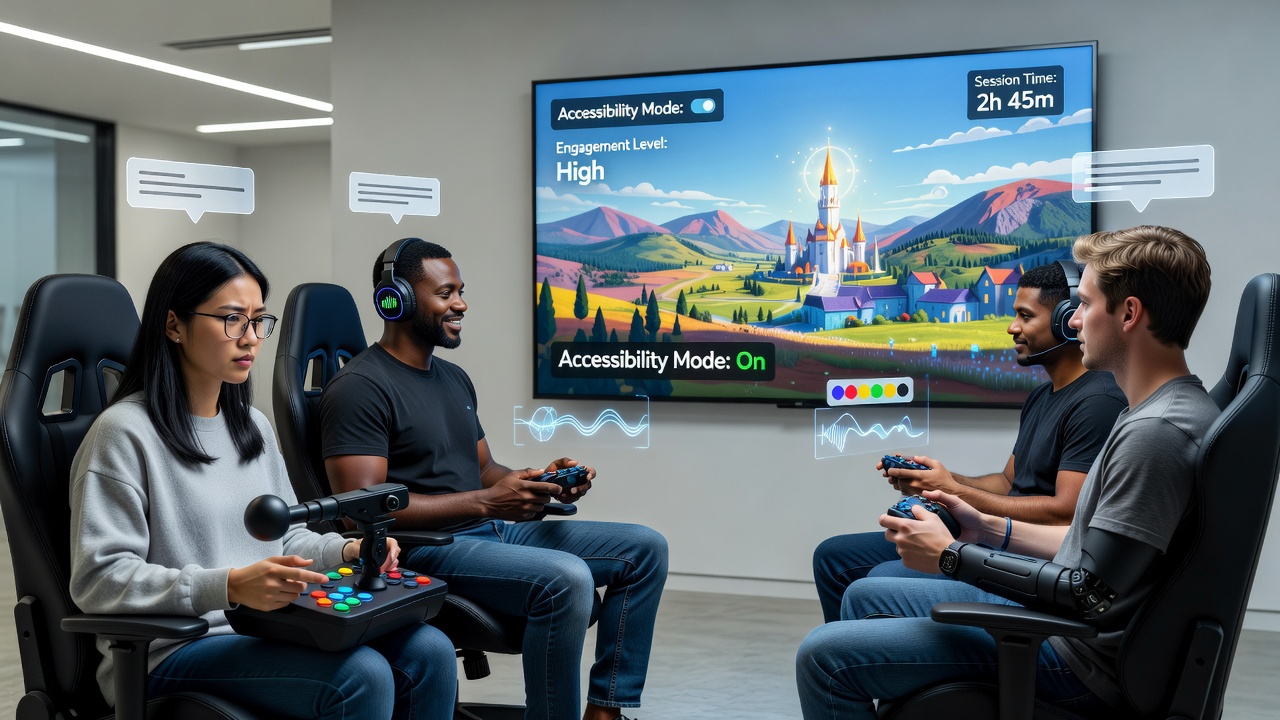
Emerging digital gaming applications have incorporated accessibility features at an accelerated pace since 2024, and data from multiple industry reports shows measurable ties between these tools and longer user sessions across mobile and console platforms. Developers integrate options such as scalable text, alternative input methods, color contrast adjustments, and audio descriptions, while engagement metrics from analytics firms indicate that titles offering these elements retain active users for extended periods compared with those that do not. Observers note that the pattern appears across genres including action, puzzle, and role-playing games released in the first half of 2026.
Core Accessibility Tools Now Standard in New Releases
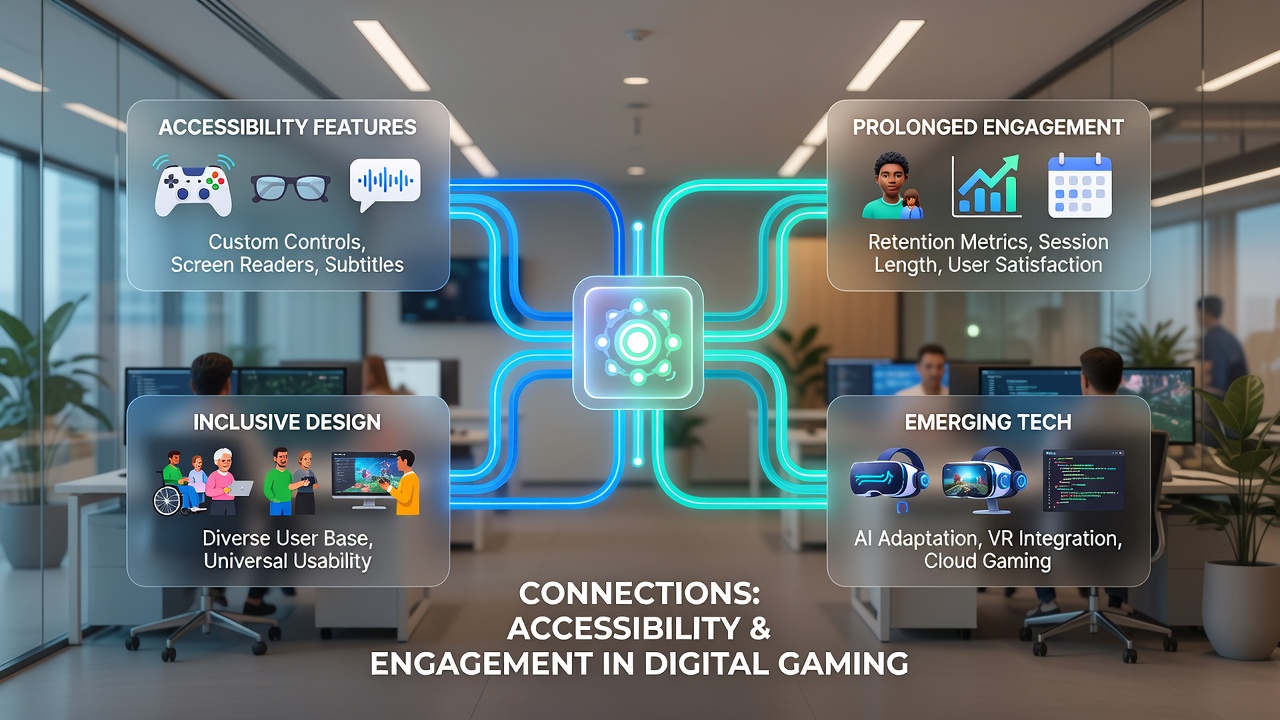
Platform holders and independent studios have adopted a common set of features that address motor, visual, and auditory needs. Customizable button mapping allows players to reassign controls without external hardware, and remappable interfaces appear in more than 60 percent of major titles tracked by the Entertainment Software Association in its 2025 annual report. High-contrast modes and colorblind filters reduce visual strain during marathon sessions, while closed captioning systems display dialogue and sound cues in real time. Text-to-speech and screen reader compatibility further extend access for users who rely on auditory feedback, and these functions now ship enabled by default in several new applications launched between January and June 2026.
Engagement Data Points to Clear Patterns
Figures released by SuperData in early 2026 reveal that games with at least four built-in accessibility toggles maintain average play sessions 28 percent longer than comparable titles lacking those options. The same dataset tracks daily active users over 90-day windows adn shows retention rates climbing when subtitle customization and difficulty scaling remain available from the first launch screen. Researchers at the University of Melbourne published findings in May 2026 that link adjustable game speed settings to reduced fatigue, which in turn correlates with users returning for multiple consecutive days. Those metrics align with telemetry gathered from cloud-based services that record session length without identifying individual accounts.
Regional Examples Highlight Implementation Differences
North American studios have emphasized motor accessibility through adaptive trigger support on current-generation controllers, while European developers have prioritized multilingual caption systems that support more than 20 languages. Australian regulatory guidance issued in March 2026 encouraged developers to include scalable user interfaces as a baseline requirement for certain funding programs, and early results indicate higher completion rates for narrative-driven games that followed those recommendations. One title released in April 2026 recorded a 35 percent increase in total hours played after adding a single toggle for reduced flashing effects, according to internal analytics shared with industry analysts.
Technical Integration and Platform Support
Operating system updates rolled out in July 2026 by major mobile providers introduced deeper hooks for game developers to detect and respond to system-level accessibility preferences automatically. These changes allow applications to inherit contrast settings and font sizes from the device without requiring separate menus inside each game. Cross-platform engines have added modular accessibility packages that developers can activate with minimal additional code, and adoption rates for these packages rose sharply between March and July. Data collected by the Interactive Games and Entertainment Association shows that games built on updated engines retain users through at least the first ten levels at higher rates when accessibility flags remain active throughout progression.
Measurement Challenges and Ongoing Research
Quantifying direct causation between specific features and session length remains complex because multiple variables influence player behavior simultaneously. Analytics teams therefore combine telemetry with anonymized surveys conducted by third-party research groups. A July 2026 working paper from the Digital Games Research Association outlines standardized logging protocols that distinguish between voluntary extended play and sessions prolonged by accessibility adjustments. Early testing of these protocols across 12 titles indicates that features allowing players to slow in-game time or pause without penalty produce the strongest measurable lift in total engagement hours.
Conclusion
Current evidence from industry datasets and academic studies demonstrates consistent associations between accessibility implementations and extended engagement metrics in emerging digital gaming applications. Developers continue to refine these tools as platform support expands, and ongoing measurement efforts will clarify which combinations deliver the most sustained user activity across different regions and device types.